Home About Projects (1,725 jobs) Our clients Services Soil Investigation & Testing Pile Testing Topographic Survey Geotechnical Instrumentation Structural Testing (NDT) Environmental Site Assessment Geotechnical Design Civil & Structural Design Articles Careers Contact · Request a quote
Service overview

Pile testing services at a glance

Pile testing verifies that piles actually carry the design load and have no defects in the pile shaft. SPN services are grouped into load testing (PDA, Static Load Test by Kentledge and Anchor Pile methods, Instrumented, Tension, Lateral), non-destructive integrity testing (Seismic PIT, Side Echo, CSL, Parallel Seismic and existing pile assessment) and special testing (Pile Bending Test). In general, the Seismic Integrity Test is the most economical, so it suits testing every pile; PDA gives load capacity within a single day; and the Static Load Test gives the most direct result but takes the most time and budget

Scope

Scope

  • Load capacity: PDA · Static Load Test · Instrumented · Tension · Lateral
  • Integrity: Seismic PIT · Side Echo · CSL · Parallel Seismic
  • Piles and footings of existing buildings
  • Pile Bending Test
When to use

When to use

  • Confirm design pile capacity before construction continues
  • Detect cracks, necking and pile length on every pile
  • Piles under uplift and lateral load, e.g. solar farms, towers, piers
  • Old buildings without drawings, before extending or buying a used factory/warehouse
Deliverables

Deliverables

  • Load capacity from CAPWAP or a Load–Settlement Curve
  • Integrity and length results for each pile
  • Report certified by a COE-licensed engineer to ASTM · DPT standards
Comparison

Pile testing methods compared

Each method answers a different question — see what your project needs to know, then choose the method that answers it directly

← Scroll the table left–right to see all columns →

Comparison of pile testing services — question answered, deliverables, standards and starting price
ServiceAnswers the questionDeliverablesStandardStarting price
Load Testing
Dynamic Load Test (PDA)How much load can the pile carry? (assessed from stress waves)Ultimate Capacity (CAPWAP), Driving Stress, Hammer EfficiencyASTM D4945 · DPT 1252-51From ~5,500 THB/pile
Static Load Test — KentledgeDoes the pile carry the design load under real compression? (dead-weight platform as reaction)Load–Settlement Curve, residual settlementASTM D114350,000–150,000+ THB/pile
Static Load Test — Anchor PileDoes the pile carry the design load on a tight site or where dead weight is hard to bring in? (anchor piles as reaction)Load–Settlement Curve, residual settlementASTM D114350,000–150,000+ THB/pile
Instrumented Static Load TestHow much resistance comes from skin friction vs end bearing, per soil layer?Load Transfer Curve, unit skin friction per layer, end bearingASTM D1143 + Strain GaugeRequest a quote
Static Tension TestHow much uplift can the pile resist?Load–Uplift CurveASTM D3689Request a quote
Lateral Load TestHow much lateral load can the pile resist?Load–Deflection Curve, p-y parametersASTM D3966Request a quote
Non-destructive integrity testing
Seismic Integrity Test (PIT)Is the pile shaft sound, or are there cracks or necking?Reflectogram showing defect locations and approximate lengthDPT 1551-51~100–150 THB/pile
Side Echo TestIs a pile already under a footing or structure sound?Reflectogram showing anomaly locations and pile length (when the toe signal is clear)Adapted from DPT 1551-51Request a quote
Cross-Hole Sonic Logging (CSL)Where does the concrete in a bored pile have voids or low quality?Waterfall Plot, Velocity TomographyACI PRC-228.2Request a quote
Parallel Seismic TestHow long is the existing pile? (no drawings / pile head not accessible)Pile toe levelASTM D8381Request a quote
Existing pile assessmentCan the existing foundation take an extension or added load?Pile length/condition, concrete condition, assessed load capacityASTM D8381 · DPT 1551-51 · ASTM C597/C805Request a quote
Special testing
Pile Bending TestCan the pile carry the design bending moment?Load–Deflection Curve, cracking moment, crack widthProof load per project specs (e.g. ACI 318-19 Chapter 27)Request a quote

Approximate starting prices, excluding travel and equipment mobilization costs, which depend on site distance — see Pricing and service area

Choosing a method

Which pile testing method should you choose?

Start with what your project needs to know, then pick the method that answers it — if you're unsure, send your foundation drawings via LINE and our engineers will help you choose (How many piles to test?)

You need to confirm pile capacity for an authority or the designer

Piles are driven or bored and you want to check every pile's integrity before building footings

RecommendedSeismic PIT

Footings are cast or a structure covers the pile heads, and you want to know if the piles below are sound

Large bored piles that need concrete QA along the full length

RecommendedCSLSeismic PIT

An existing building with no drawings, to be bought or extended, and you need to know how long the piles are

Solar farms, towers, piers — piles must resist uplift or lateral load

A project with many piles, where you want to optimize pile length with real field data

RecommendedInstrumented SLT

Piles used as retaining walls or along canals, mainly carrying bending

You need a Static Load Test but the site is tight or dead weight is hard to bring in

How we work

How pile testing with SPN works

  1. Send project details

    Foundation drawings, pile type/size/quantity and site coordinates via LINE @spnth or call +66 64 746 9601

  2. Method advice and quotation

    Our engineers choose the right test method, with a quotation within 24 hours

  3. Site preparation

    Prepare pile heads and the reaction system per our checklist (how to prepare pile heads)

  4. On-site testing

    Engineering teams with PDA · Seismic · Static Load equipment work on site nationwide

  5. Analysis and reporting

    Analysis (e.g. CAPWAP) and a report certified by a COE-licensed engineer (what a report must include)

Service details

Details of each test method

Principles, deliverables and suitable applications for each method, with real SPN site photos — click a photo to view all enlarged images

Load Testing

Dynamic Load Test (PDA / High Strain)

ASTM D4945Load testing
Read the full guide →

What is a Dynamic Load Test (PDA)?

A Dynamic Load Test, or PDA Test (Pile Driving Analyzer), is High Strain Dynamic Testing of pile load capacity per ASTM D4945 and DPT 1252-51. Strain gauges and accelerometers are installed on the pile near its head to record force and velocity as the hammer strikes the pile head. The PDA performs a preliminary analysis (Case Method) in real time, and the signals are then analyzed by signal matching with CAPWAP (Case Pile Wave Analysis Program) to find the ultimate pile capacity

Data from a PDA test

  • Ultimate Pile Capacity—Maximum load capacity of the pile, split into skin friction and end bearing
  • Driving Stress—Maximum compressive and tensile stresses in the pile during driving, used to prevent pile cracking or damage
  • Hammer Efficiency—Efficiency of the pile driving hammer, used to check and improve driving
  • Pile Integrity—Preliminary integrity check of the pile from the wave signals
  • Set per Blow—Penetration per hammer blow, used to control when driving stops

Advantages of a Dynamic Load Test over a Static Load Test

A Dynamic Load Test can test several piles per day at a cost per pile many times lower than a Static Load Test (detailed Dynamic vs Static comparison), making it suitable for high-volume testing for quality control across a whole project. However, if a project needs the highest accuracy or the work is for research, the Static Load Test remains the gold standard, giving a Load-Settlement Curve under real compression

Projects suited to PDA testing

  • Large projects with many piles that need fast QC, such as industrial estates, warehouses and factories
  • Re-strike Test retesting after a set-up period to confirm the long-term capacity gained from soil setup
  • Piles suspected of not reaching the bearing stratum, checked before deciding to drive further
  • Space-constrained projects where a reaction system for a static test cannot be set up

Static Load Test — Kentledge Method

ASTM D1143Load testing
Read the full guide →

What is a Static Load Test by the Kentledge Method?

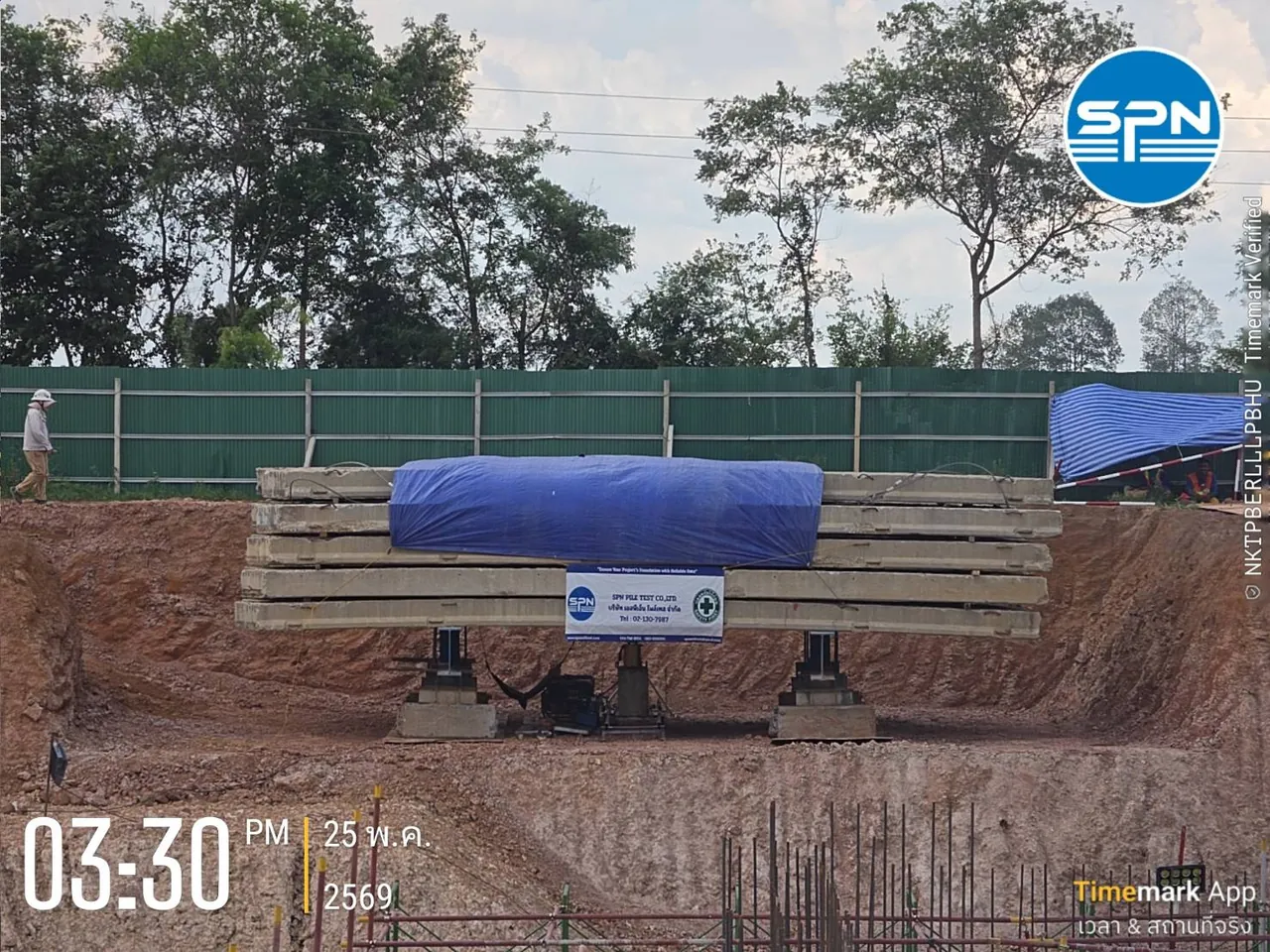
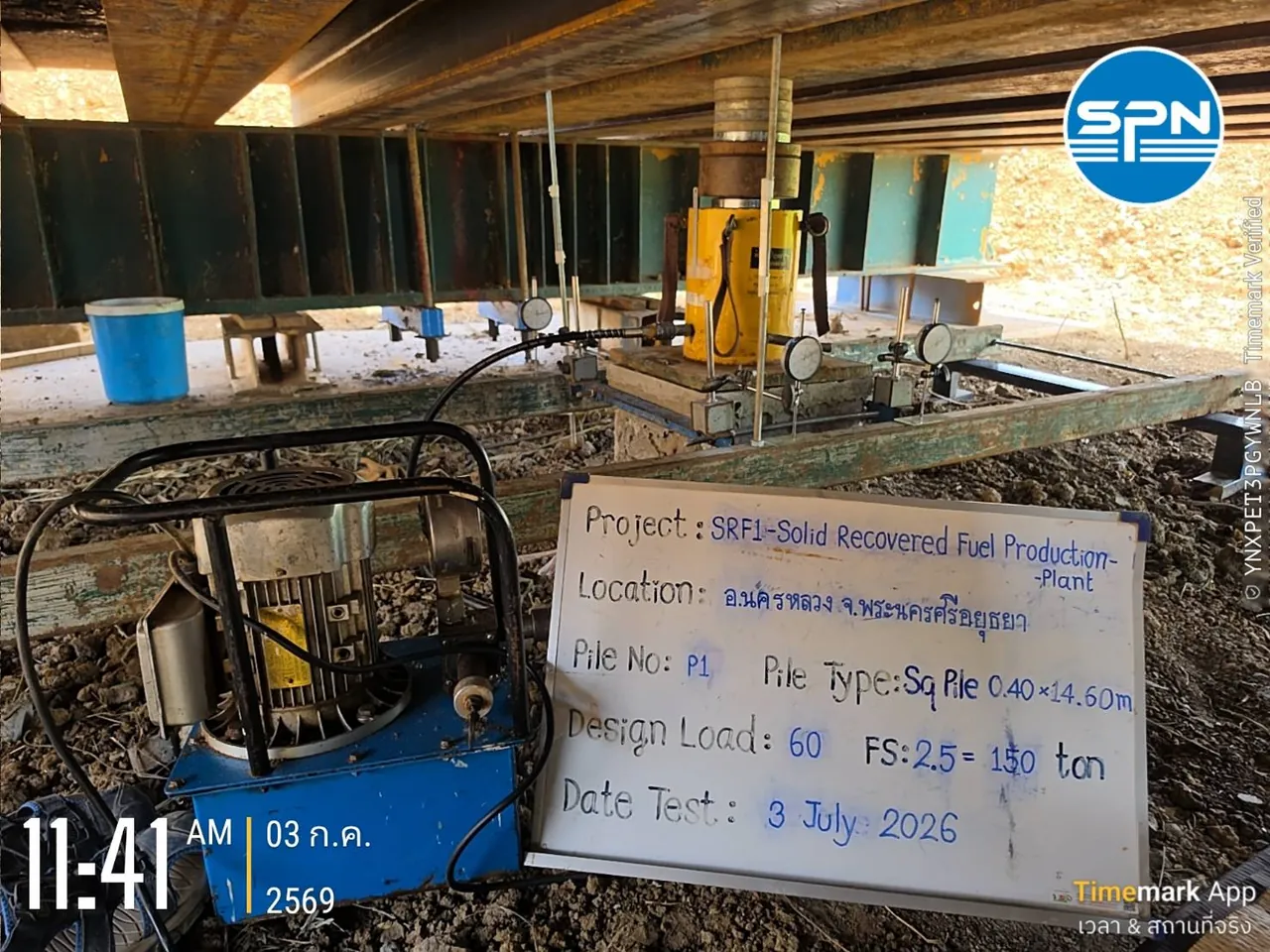
A Static Load Test by the Kentledge Method is the most accurate pile load test. Concrete or steel blocks with a total weight of no less than the maximum test load (typically 200% of the design load) are stacked as a kentledge above the test pile. Load is applied through a hydraulic jack, and settlement is measured with dial gauges or linear transducers mounted on an independent reference beam, recorded at every load increment per ASTM D1143

Maintained Load Test (MLT) procedure

  • Loading Phase—Load is increased in steps, typically 8–10 increments up to 200% of the design load, waiting for settlement to stabilize before the next increment
  • Maintained Load—The maximum load is held for 24 hours, recording settlement throughout
  • Unloading Phase—Load is reduced in steps, recording rebound
  • Residual Settlement—Permanent settlement measured after full unloading

Projects suited to the Kentledge Method

  • Projects with enough space for a kentledge stack, such as factories, warehouses and industrial estates
  • Piles that need a Load-Settlement Curve for foundation design, or confirmation of capacity above 500 tons
  • Critical works that require the highest reliability, such as power plants, oil depots and special structures

Static Load Test — Anchor Pile Method

ASTM D1143Load testing
Kentledge vs Anchor →

What is a Static Load Test by the Anchor Pile Method?

The Anchor Pile Method tests pile load capacity using anchor piles (reaction piles) to provide the reaction instead of dead weight. The setup consists of the test pile in the center, 2–4 anchor piles around it and a reaction beam connecting them. Load is applied through a hydraulic jack and settlement is measured from an independent reference beam, giving results equivalent to the Kentledge Method per ASTM D1143

Differences from the Kentledge Method

  • No dead weight to transport—Greatly reduces kentledge transport and setup costs at remote sites
  • Suits confined sites—No space needed for a large weight stack
  • Highly flexible—Reaction layout can be adapted to site conditions
  • Anchor piles must be designed—Anchor piles must have sufficient tensile capacity; uplift capacity must be considered

Projects suited to the Anchor Pile Method

  • Sites where kentledge is hard to bring in, such as urban areas, under bridges or tight spaces
  • Projects where anchor piles are installed together with production piles, saving significant cost
  • Testing large bored piles without needing a very heavy kentledge

Instrumented Static Load Test

ASTM D1143 + Strain GaugeLoad testing
Read the full guide →

What is an Instrumented Static Load Test?

An Instrumented Static Load Test is a Static Load Test per ASTM D1143 with strain gauges installed at several levels along the pile before casting. At each load step, strain is read at every level and converted to force in the pile, showing how much load is transferred to the soil by skin friction in each soil layer and how much reaches the toe (end bearing) — information a standard Static Load Test cannot provide

Test deliverables

  • Load Transfer Curve—Plot of pile force versus depth at every load step
  • Unit skin friction per soil layer—Actual skin friction of each layer, compared with design values
  • End Bearing—Bearing resistance at the pile toe
  • Load–Settlement Curve—Same result as a standard Static Load Test

When is it worth doing?

  • Projects with many piles, where data from a few test piles may be used to adjust pile lengths across the whole project
  • Complex soil profiles, such as thick soft clay interbedded with sand, where design parameters are highly uncertain
  • Long or heavily loaded piles, where the skin/toe resistance split strongly affects safety and construction cost

Requirements before testing

The decision must be made before the pile is cast, because the gauges are tied to the reinforcement cage and embedded in the concrete. Gauge levels are set to bracket the soil layer boundaries from the boring results, and the cables must be protected while lowering the cage and pouring concrete. See more instrumentation work at Instrumentation services

Static Tension Pile Load Test

ASTM D3689Load testing
Read the full guide →

What is a Static Tension Pile Load Test?

A Static Tension Pile Load Test, or Uplift Test, measures the tensile (uplift) capacity of a pile by pulling it upward along its axis per ASTM D3689. A pile's tensile capacity comes mainly from skin friction between the pile and the soil, excluding end bearing at the toe

Test principle

The pile head is connected to a reaction frame with rods or strands linked to the beam structure. Tension is applied through a hydraulic jack, and upward displacement is measured with dial gauges or LVDTs mounted on an independent reference beam. A Load-Uplift Curve is recorded at each load increment up to 200% of the design tensile load

Projects that need a Tension Test

  • High-voltage transmission towers—Piles carry very high tension from overturning moment and wind
  • Floating structures and piers—Resist uplift from water and waves
  • High-rise buildings in seismic zones—Corner piles take tension during earthquakes
  • Earth-retaining anchors (anchor wall / tie-back)—Pullout capacity must be confirmed before use
  • Underground oil storage and water tanks—Resist groundwater pressure that tends to lift the structure

Lateral Pile Load Test

ASTM D3966Load testing
Read the full guide →

What is a Lateral Pile Load Test?

A Lateral Pile Load Test measures a pile's horizontal load capacity and lateral deflection behavior per ASTM D3966. Load is applied through a hydraulic jack between the test pile and a reaction, which may be an adjacent pile, an excavator or an existing structure. Movement is measured with dial gauges or electronic displacement transducers with an independent reference beam

Test deliverables

  • Load-Deflection Curve—Relationship between lateral load and deflection, used to verify the design
  • Subgrade Reaction Modulus (p-y Curve)—Parameters for analyzing laterally loaded pile behavior
  • Ultimate Lateral Capacity—Maximum lateral capacity before pile failure
  • Bending Moment Profile—With strain gauges along the pile, the location of maximum moment can be identified

Projects that need a Lateral Load Test

  • Bridge piers and elevated roadways—Resist horizontal braking, wind and seismic forces
  • Piers and coastal structures—Resist ship impact and wave forces
  • Piles in deep excavations—Confirm the lateral stiffness of the support system
  • Buildings in seismic zones—Check pile behavior under seismic loads
  • Retaining wall piles—Confirm the passive resistance of the soil

Integrity Testing

Seismic Pile Integrity Test (PIT)

DPT 1551-51 · ASTM D5882-16 (withdrawn 2025)Integrity testing
Read the full guide →

What is a Seismic Pile Integrity Test (PIT)?

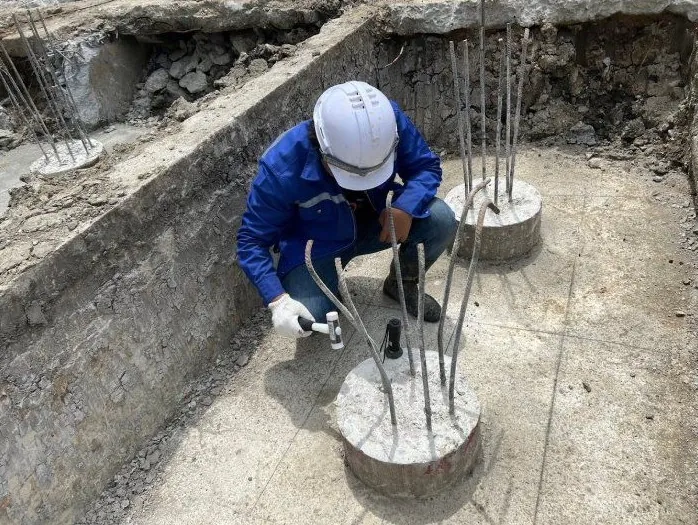
The Seismic Pile Integrity Test, or Low Strain Integrity Test, is a non-destructive test of pile integrity per DPT 1551-51 and ASTM D5882-16 (withdrawn in 2025 — DPT is used as the main criterion). A light hammer taps the pile head, creating a stress wave that travels down the full pile length. The return signal is picked up by an accelerometer or velocity transducer and analyzed with PILE INTEGRITY TESTER (PIT-W) software to find the location and size of defects (read more: How to read Seismic Test results)

What a PIT test can detect

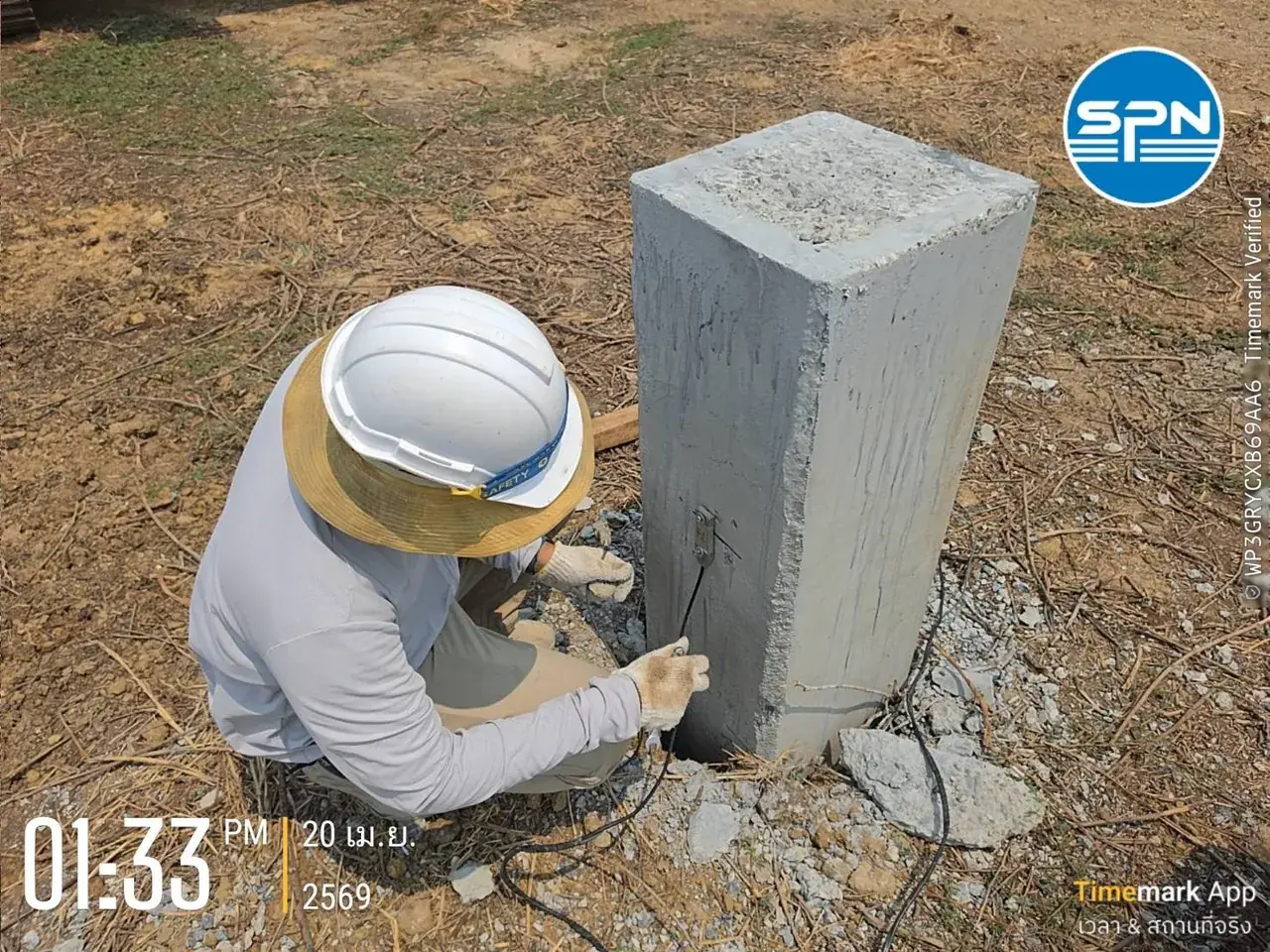
  • Cracks—Pile cracked during driving or transport, shown as an early reflection on the plot
  • Necking—Bored pile diameter reduced at some levels
  • Pile joints—Splices between pile segments, checked for continuity
  • Pile toe—Confirms pile length against the construction drawings
  • Voids or poorly compacted concrete—In bored piles with substandard concrete quality

Limitations of PIT testing

PIT testing has limitations for piles with a length-to-diameter ratio (L/D) above 30, because the signal attenuates before reaching the toe, and it is not suited to detecting defects at very great depth. In such cases, CSL or Parallel Seismic testing is recommended in addition

Projects suited to PIT testing

  • Testing all piles on a project after driving, for preliminary QC before casting footings
  • Piles suspected of cracking or damage during driving
  • Checking existing piles in building repair work before adding load
  • Confirming pile length together with boring log data

Side Echo Test — side integrity testing of piles

Adapted from DPT 1551-51Integrity testing
Request a quote →

What is a Side Echo Test?

The Side Echo Test is a side integrity test of piles developed from the standard Seismic Integrity Test, so that pile integrity can be tested when a sensor cannot be mounted on the pile head — for example, when a structure already sits above the test pile head. It assesses pile integrity and can also assess pile length (when a clear toe reflection is observed)

Test principle

  • Excavate a pit beside the footing—Dig beside the footing or pedestal until the side surface of the pile below the footing is exposed
  • Install the impact point and sensor—Fix a transfer block and an accelerometer to the side surface of the pile
  • Tap and record signals—Tap with a hand hammer so a stress wave travels along the pile, and record the reflections with a Seismic Integrity Tester
  • Analyze results—Interpret the reflectogram for anomalies in the pile, and the toe level when a clear reflection is found

What is it suited to?

  • Piles with a footing, pedestal or structure already cast above the pile head
  • Checking existing building piles before extending, repairing or adding load (see Existing pile assessment)
  • Buildings with settlement or cracks that need the piles under the footings checked
  • Preliminary length assessment of existing piles when a clear toe reflection is found

Limitations to note

A pit must be dug down to the side surface of the pile; if groundwater is high, it must be pumped out before testing. Reflections from the footing and the structure above can interfere with interpretation, making it harder to interpret than a standard Seismic Integrity Test at the pile head, and length can be assessed only when a clear toe reflection is seen — to confirm existing pile length directly, we recommend the Parallel Seismic Test (ASTM D8381)

Cross-Hole Sonic Logging (CSL)

ACI PRC-228.2 · ASTM D6760-16 (withdrawn 2025)Integrity testing
Read the full guide →

What is Cross-Hole Sonic Logging (CSL)?

Cross-Hole Sonic Logging (CSL) is a non-destructive test of concrete quality in bored piles. Ultrasonic waves are sent from a transmitter probe in one water-filled access tube to a receiver probe in another, measuring the wave velocity and signal energy through the concrete, following ASTM D6760-16 (withdrawn by ASTM in 2025 with no replacement yet). ACI PRC-228.2 is currently referenced as the main guidance document. Results are presented as a waterfall plot and a velocity tomography map, accurately locating defects and their depth

Reading results — Good Signal / Delayed Signal / Blocked Signal

Received signals fall into 3 levels: Good Signal — the wave travels directly through normal concrete at high velocity, indicating sound concrete; Delayed Signal — the wave takes longer, indicating a partial defect in the concrete, such as small voids or segregation; and Blocked Signal — no signal or a very weak signal, indicating a large defect or void blocking the signal path

Projects suited to CSL testing

  • Large bored piles / barrettes—Diameter 0.60 m and above, where concrete quality must be confirmed before the pile takes load
  • Factories, warehouses and high-rise buildings—With special requirements from the design engineer or owner
  • Piles with suspected construction problems—Such as slurry or water ingress during concreting
  • Energy, petrochemical and infrastructure projects—That require quality assurance documentation

Prerequisites before testing

Piles must have access tubes (PVC or steel) installed in the reinforcement cage before concreting. The number of tubes depends on pile size (FHWA guidance: about 1 tube per 0.25–0.30 m of diameter, e.g. 3 tubes for ⌀ 0.80 m and 4 or more for large piles). Tubes must be filled with water before testing, and testing can be done at the earliest once the concrete is 7 days old

Parallel Seismic Test (PS Test)

ASTM D8381Integrity testing
Read the full guide →

What is a Parallel Seismic Test?

A Parallel Seismic Test (PS Test) is a non-destructive test used to assess the length of piles or buried foundations (foundation depth assessment) without excavating. It is especially suited to old structures without as-built drawings, or piles whose heads cannot be accessed

Parallel Seismic test principle

A borehole is drilled 1–3 meters from the pile, deeper than the expected pile length. The pile head (or structure) is then struck to generate a stress wave, and the signal is received by a hydrophone or geophone lowered step by step in the borehole, recording the wave arrival time (travel time) at each depth. The velocity profile shows a clear change in wave velocity where the wave stops traveling through the pile and passes directly through the soil, which corresponds to the pile toe

Advantages of the Parallel Seismic Test

  • Assesses pile length without excavating — minimizing damage to the existing structure
  • Suits piles whose heads are buried under footings or concrete slabs
  • Works with all foundation types — concrete, timber, steel and bored piles
  • Supports assessment of special structures such as bridge piers, retaining walls, sheet piles and weirs
  • Highly accurate results when combined with soil profile data from soil boring

When to use a Parallel Seismic Test

  • Building repairs and extensions—Existing pile length must be known before designing for added load
  • Structures without as-built drawings—Old buildings, bridges and piers whose drawings have been lost
  • Assessment before demolition or renovation—Check whether existing piles can take additional load
  • Bridges and irrigation structures—Assess foundation depth in hard-to-reach water
  • Disputes and engineering litigation—Technical evidence to prove pile length

Parallel Seismic vs Seismic PIT

Seismic PIT (low strain) checks pile integrity — whether there are cracks or defects — but is limited in assessing the length of piles with a high length-to-diameter ratio (L/D > 30). Parallel Seismic is designed specifically for length assessment and gives more accurate results for long piles and complex foundations

Existing Foundation Assessment

ASTM D8381 · DPT 1551-51Integrity testing
Read the full guide →

What is an existing pile assessment?

An assessment of the footings and piles of a building in use, for buying a used factory or warehouse, extending a building, adding load, or buildings without construction drawings. SPN sets up a test package that answers the project's questions directly instead of testing everything — starting with an engineer's condition survey, then test pits to expose footings at representative points, followed by only the tests needed

Common test packages

Deliverables

A report on footing condition, pile length and integrity at representative points, assessed load capacity, and recommendations for extension or foundation strengthening — certified by a licensed engineer and usable for purchase decisions or extension design

Special Testing

Pile Bending Test — pile bending moment test

Proof load per project specsSpecial testing
Request a quote →

What is a Pile Bending Test?

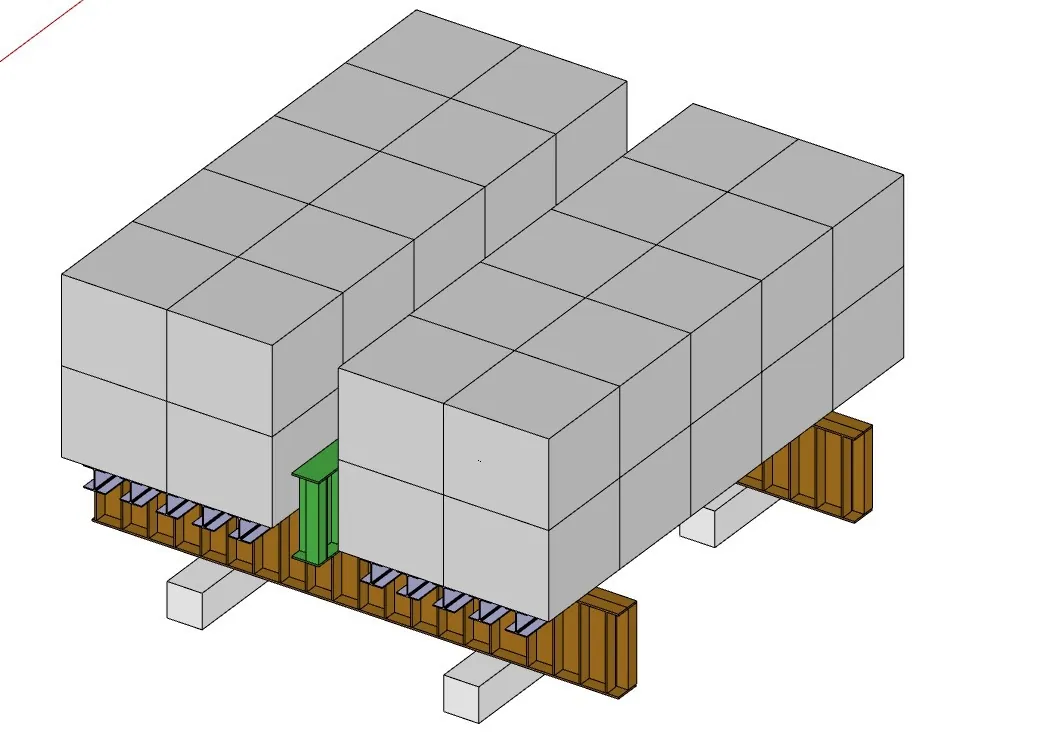
A Pile Bending Test measures the bending moment capacity of precast prestressed concrete piles, such as I-piles, square piles or spun piles. The pile is placed on two supports as a simple span, and load is added in steps (step loading) using concrete dead-weight blocks or hydraulic jacks up to the specified test moment (proof load), measuring deflection and checking for cracks at every step

Test load criteria

The test moment is set by the project specifications or the design engineer, e.g. referencing the load test criteria of ACI 318-19 Chapter 27 or Engineering Institute of Thailand (EIT) criteria. SPN prepares calculations of the dead weight, placement positions and loading steps for the designer to review before testing

Test deliverables

  • Load–Deflection Curve—Midspan deflection at every load step, and recovery after unloading
  • Cracking Moment—Moment at which the first crack appears
  • Crack width—Measured against the project's acceptance criteria

Work that needs bending tests

  • Piles used as retaining walls along canals, riverbanks and drainage channels, mainly carrying bending
  • Acceptance testing of precast piles before use, per project specifications
  • Piles suspected of damage from lifting, handling or storage
Pile Bending Test diagram The pile rests on two supports as a simple span; concrete dead-weight blocks are stacked at midspan in steps, and a dial gauge measures deflection under midspan Concrete dead weight — added in steps Test pile Support Support Dial gauge (deflection) Test span — per design and test moment
Pile Bending Test principle diagram — dead weight at midspan, added in steps (dashed orange = next step), measuring deflection and checking cracks at every step

What kinds of projects has SPN tested piles for?

Real projects published on our website, with links to the full details

Parallel Seismic · Bang Sao Thong, Samut Prakan

Finding existing pile length at a factory without foundation drawings

Parallel Seismic testing of 2 piles found the pile toes at about 22.60–23.35 m below the factory floor. Compared with borehole BH-1 (30.45 m deep), the toes sit at the boundary between soft clay and stiff clay

  • Pile toe ~22.60–23.35 m
  • BH-1 depth 30.45 m
Read the full case study →
Dynamic Load Test (PDA) · Rayong

Confirming driven pile capacity on a factory project

High strain Dynamic Load Testing of driven prestressed concrete piles on a factory project in Rayong, to confirm pile load capacity

  • ASTM D4945
  • Driven prestressed concrete piles
Read the full case study →
Uplift · Lateral · Solar farm

Uplift and lateral testing of solar farm piles

Solar farm piles are governed by uplift and lateral wind loads, so SPN performed uplift and lateral tests on test piles before production piling went ahead

  • ASTM D3689 (uplift)
  • ASTM D3966 (lateral)
Read the full case study →

Test results you can rely on

Every pile test report is certified by an experienced licensed engineer, usable right away for structural design and building-permit or other agency submissions

  • PDA / CAPWAP analysis report
  • Load-Settlement Curve / Load Transfer Curve
  • Load–Deflection Curve (Lateral · Bending)
  • Pile integrity evaluation results
  • Foundation engineering recommendations
  • Certified by a licensed engineer
20+
years of team experience
12
Testing services
ASTM
International standards
100%
Engineer-certified
Pricing and area

What does pile testing cost, and where does SPN work?

Pile testing prices for 2026 by method: Seismic Integrity Test about 100–150 THB/pile, Dynamic Load Test (PDA) from about 5,500 THB/pile, and Static Load Test 50,000–150,000+ THB/pile. Our testing teams work on site nationwide from our office in Samut Prakan

Starting prices, 2026

Starting prices for each pile testing method, 2026
Test methodWhat it checksStarting price
Seismic Integrity Test (PIT)Pile shaft integrity — every pile~100–150 THB/pile
Dynamic Load Test (PDA)Load capacity, assessed from stress wavesFrom ~5,500 THB/pile
Static Load Test (Kentledge / Anchor Pile)Direct load capacity, per test load50,000–150,000+ THB/pile
CSL · Parallel Seismic · Side Echo · Tension · LateralPer number of piles and project specsRequest a quote
Instrumented SLT · Existing pile assessment · BendingPer scope and number of test pointsRequest a quote

Approximate starting prices. The Seismic Test has a minimum charge per site visit; PDA pricing depends on pile size and the drop weight required; and the Static Load Test depends on the maximum test load and the reaction system (kentledge / anchor piles). These prices exclude travel and equipment mobilization costs, which depend on site distance — see price factors and sample calculations at Pile Testing Cost 2026

Service area

SPN pile testing teams, with PDA, Seismic and Static Load Test equipment, work from our office in Bang Sao Thong, Samut Prakan, and regularly cover the following areas

  • Bangkok and vicinity — Samut Prakan (office in Bang Sao Thong), Nonthaburi, Pathum Thani, Samut Sakhon, Nakhon Pathom — fastest site access and lowest travel costs
  • East / EEC — Chon Buri, Rayong, Prachin Buri — factories, warehouses and industrial estates, including petrochemical estates in Rayong
  • Central — Phra Nakhon Si Ayutthaya, Saraburi, Kanchanaburi — bridges, roads, factories and dams
  • Nationwide, 77 provinces — including river, offshore and special sites. Travel and equipment mobilization costs are added based on site distance

Real projects in the gallery above: PDA on bored piles for large projects and in industrial estates · Static Load Test with kentledge · project-wide Seismic Tests · Lateral Load Test on spun piles

Send your site location — free quotation within 24 hours

Key facts: what pile tests does SPN offer, and how long do they take?

Service
PDA, Static Load (Kentledge / Anchor Pile), Instrumented SLT, Tension, Lateral, Seismic PIT, Side Echo, CSL, Parallel Seismic, existing pile assessment and Pile Bending Test
Main standards
ASTM D4945 · DPT 1252-51 (PDA) · ASTM D1143 (Static) · ASTM D3689 (uplift) · ASTM D3966 (lateral) · DPT 1551-51 (Seismic; ASTM D5882-16 withdrawn 2025) · ACI PRC-228.2 (CSL; ASTM D6760-16 withdrawn 2025) · ASTM D8381 (Parallel Seismic)
Approximate duration
Static Load Test: 1–3 days per pile (plus 1–2 days of setup) · PDA: several piles per day · Quotation within 24 hours
Deliverables
Test report with analysis (e.g. CAPWAP), certified by a COE-licensed engineer and usable for building-permit submissions
Service area
Nationwide service across 77 provinces from our office in Bang Sao Thong, Samut Prakan
Contact
Tel. +66 64 746 9601 · LINE @spnth · info@spnth.com
FAQ

Frequently asked questions about pile testing

It depends on the test method and the design engineer's specifications. Common practice is a Seismic Integrity Test on all or nearly all piles, while the Dynamic Load Test (PDA) samples about 1–2% of all piles and no fewer than 1 pile (subject to each project's specifications). Small buildings may test 2–3 piles; large buildings may require more

Driven prestressed concrete piles, cast-in-place bored piles, steel piles and timber piles. Our engineers will recommend the right method for the pile type

Testing 1 pile takes 1–3 days depending on the test protocol (Quick Test or Slow Maintained Load), plus another 1–2 days to set up equipment and place the load

A Seismic Test shows only pile integrity (whether there are cracks, bends or breaks). It cannot determine load capacity. For load capacity, a Dynamic or Static Load Test is required

Yes. SPN pile test reports are certified by a COE-licensed engineer and can be used right away in building-permit submissions

CSL tests the concrete quality inside bored piles by sending ultrasonic waves between tubes cast in beforehand, then analyzing wave velocity to locate voids or low-quality concrete, following ASTM D6760-16 (withdrawn in 2025) and ACI PRC-228.2 guidance

A pile tension test (ASTM D3689) applies an upward pull to the pile head to find its maximum tensile capacity. It is used for structures subject to uplift, such as transmission towers, piers and buildings with high wind loads

It tests the lateral load capacity of piles (ASTM D3966) and suits bridge piles, piers, earth-retaining structures and buildings in seismic zones, measuring lateral deflection at each load level

A Parallel Seismic Test (ASTM D8381) is a non-destructive test to assess the length of piles or buried foundations without excavating. It suits old structures without construction drawings, buildings to be extended, bridges and hard-to-reach irrigation structures

Seismic PIT (low strain) checks pile integrity — whether there are cracks or defects — but has limitations for long piles. Parallel Seismic is designed specifically for length assessment and gives more accurate results for piles with a high L/D and for complex structures

Seismic PIT uses waves from tapping the pile head. It suits all pile types and is fast and low-cost, but has lower resolution than CSL. CSL uses tubes cast in beforehand and gives higher accuracy, suited to large bored piles that need detailed results

The price depends on the test method, number of piles and test load. The Seismic Integrity Test is the most economical at about 100–150 THB/pile, suited to testing every pile. The Dynamic Load Test (PDA) starts at about 5,500 THB/pile, and the Static Load Test is about 50,000–150,000+ THB/pile depending on the test load. These prices exclude travel and equipment mobilization costs, which depend on site distance. See more at Pile Testing Cost 2026 or request a free quote at +66 64 746 9601

Yes. Our pile testing teams work nationwide across all 77 provinces from our office in Bang Sao Thong, Samut Prakan, so we reach Bangkok and its vicinity fastest. We work regularly in industrial estates in the East/EEC (Chon Buri, Rayong, Prachin Buri) and the Central region (Phra Nakhon Si Ayutthaya, Saraburi, Kanchanaburi), and follow each estate's safety rules. Travel and equipment mobilization costs are added based on site distance

A standard Static Load Test shows only the total load capacity and settlement at the pile head. An Instrumented Static Load Test has strain gauges installed at several levels along the pile before casting, so you can separate how much resistance comes from skin friction in each soil layer and from end bearing at the toe (Load Transfer Curve). It suits projects with many piles or that need to confirm design parameters. The gauges must be planned and installed before the pile is cast

Yes. We use the Parallel Seismic Test (ASTM D8381) to find the length of existing piles without exposing the pile head, combined with test pits to expose footings, the Seismic Integrity Test where the pile head can be exposed (or the Side Echo Test where a footing covers the pile head), non-destructive concrete testing and soil boring, to assess load capacity before buying or extending the building

Yes. We use the Side Echo Test , developed from the standard Seismic Integrity Test: a pit is dug beside the footing and the sensor is mounted on the side surface of the pile instead of the pile head. It assesses the integrity of piles under existing footings or structures, and can assess pile length when a clear toe reflection is observed. To confirm pile length directly, we recommend the Parallel Seismic Test (ASTM D8381)

It checks that precast prestressed concrete piles can carry the design bending moment. The pile is placed on two supports and dead weight is added in steps up to the test moment, measuring deflection and cracks at every step. It is often used for piles acting as retaining walls along canals and riverbanks, or for acceptance testing of precast piles. The test load is set by the project specifications or the design engineer